The Complete Guide to BJJ Belt Progression in Kenwood
Earning a new belt in Brazilian Jiu-Jitsu represents one of the most rewarding achievements in martial arts. Unlike many combat sports, BJJ does not hand out promotions lightly. Every single stripe reflects genuine dedication, technical growth, and mental resilience. At Gracie Barra Kenwood, we follow a structured curriculum designed to guide practitioners step by step. Understanding this progression system helps students of all ages stay motivated throughout their martial arts journey.
Discover Gracie Barra Kenwood
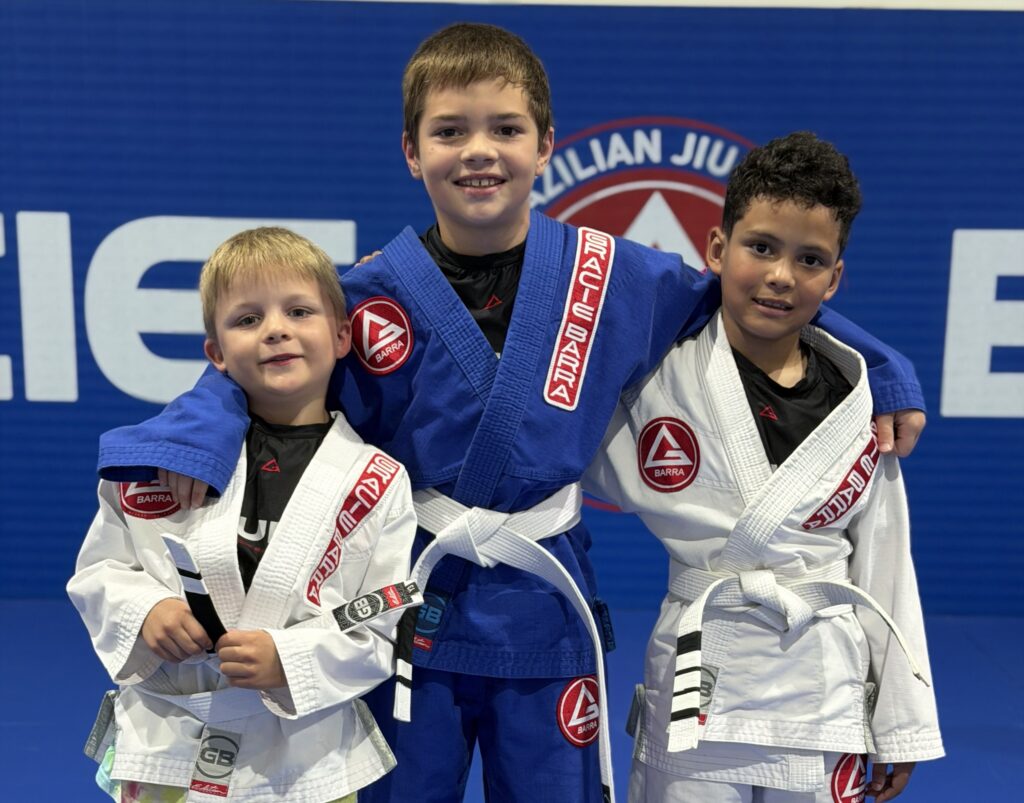
The Gracie Barra Kids Belt Progression System
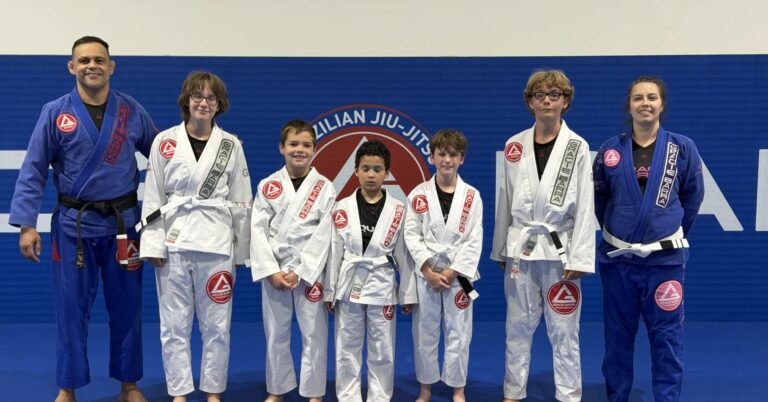
Children require frequent milestones to maintain motivation, focus, and enthusiasm. Therefore, the International Brazilian Jiu-Jitsu Federation and Gracie Barra implement a dedicated youth belt ranking system. This framework accommodates young practitioners between the ages of 4 and 15 years old.
Through our GBK program, children learn discipline, respect, and bully prevention in an uplifting environment. The youth system divides promotions into four color groups before students reach the adult ranks.
White Belt: Introduction and Foundational Habits
Every child begins with a solid white belt. During this phase, instructors introduce basic movement patterns, coordination drills, and mat etiquette. Children learn how to fall safely, follow instructions, and respect their training partners. Moreover, our Kenwood coaches emphasize listening skills and emotional control right from day one.
Grey Belt Group: Ages 4 to 15
The grey belt category serves as the first major achievement for dedicated young students. This group includes three separate stages: Grey and White, solid Grey, and Grey and Black.
Practitioners develop reliable defensive postures and master fundamental escapes. In addition, students begin executing essential sweeps and positional controls with increasing confidence. Most children enter this rank group after demonstrating consistent attendance and positive behavior.
Yellow Belt Group: Ages 7 to 15
As students mature physically and mentally, they progress toward the yellow belt division. This bracket includes Yellow and White, solid Yellow, and Yellow and Black belts.
At this stage, young martial artists demonstrate fluid movement and sharper technical timing. They effectively link simple escapes directly into attacking combinations. Consequently, instructors encourage students to think strategically rather than relying solely on raw energy.
Orange Belt Group: Ages 10 to 15
The orange belt group marks an advanced stage of youth development. It features Orange and White, solid Orange, and Orange and Black belts.
Practitioners at this level understand leverage, balance manipulation, and tactical transitions deeply. Furthermore, orange belts often assist coaches by setting excellent examples for newer students. Their dedication shows both inside the classroom and during competitive tournaments.
Green Belt Group: Ages 13 to 15
The green belt represents the pinnacle of the youth ranking system. It includes Green and White, solid Green, and Green and Black belts.
Green belts possess an extensive technical repertoire comparable to adult blue belts. They move with remarkable precision, calmness, and purpose. In addition, these seasoned teens prepare mentally for their upcoming transition into the adult curriculum.
The Transition from Youth to Adult Belts
When a student turns 16 years old, they officially graduate into the adult belt system. A green belt holder often advances directly to an adult blue belt based on instructor assessment. Alternatively, they may receive an adult white belt with multiple stripes to reflect their rich experience. This seamless transition ensures continued personal growth and safety.
Adult BJJ Belt Progression: The Five Core Ranks
The traditional adult ranking system features five primary colored belts before reaching master levels. Each rank signifies a distinct phase of technical comprehension and self-discovery.
White Belt: Surviving and Building Fundamentals
Every adult practitioner begins wearing a crisp white belt. During this initial stage, students focus primarily on survival and basic body mechanics. You learn how to relax under heavy pressure and protect yourself from danger.
Furthermore, our GB1 Fundamentals curriculum in Kenwood teaches essential escapes, basic guard passes, and positional control. Most students spend between one and two years mastering these critical defense mechanisms.
Blue Belt: Expanding Your Technical Vocabulary
Reaching blue belt marks a major milestone for any dedicated martial artist. At this stage, your defense becomes second nature, allowing you to explore offensive opportunities.
You begin experimenting with complex guard variations, sweeps, and submission combinations. Additionally, blue belts learn how to adapt their movements against varying body types and training intensities. Consistency during this rank remains crucial, as refining core techniques requires deep patience.
Purple Belt: Refining Personal Style and Timing
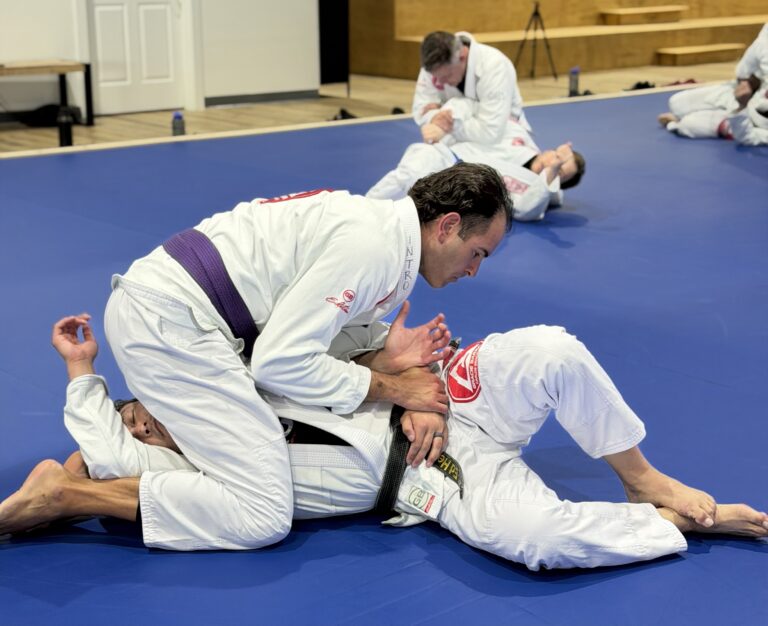
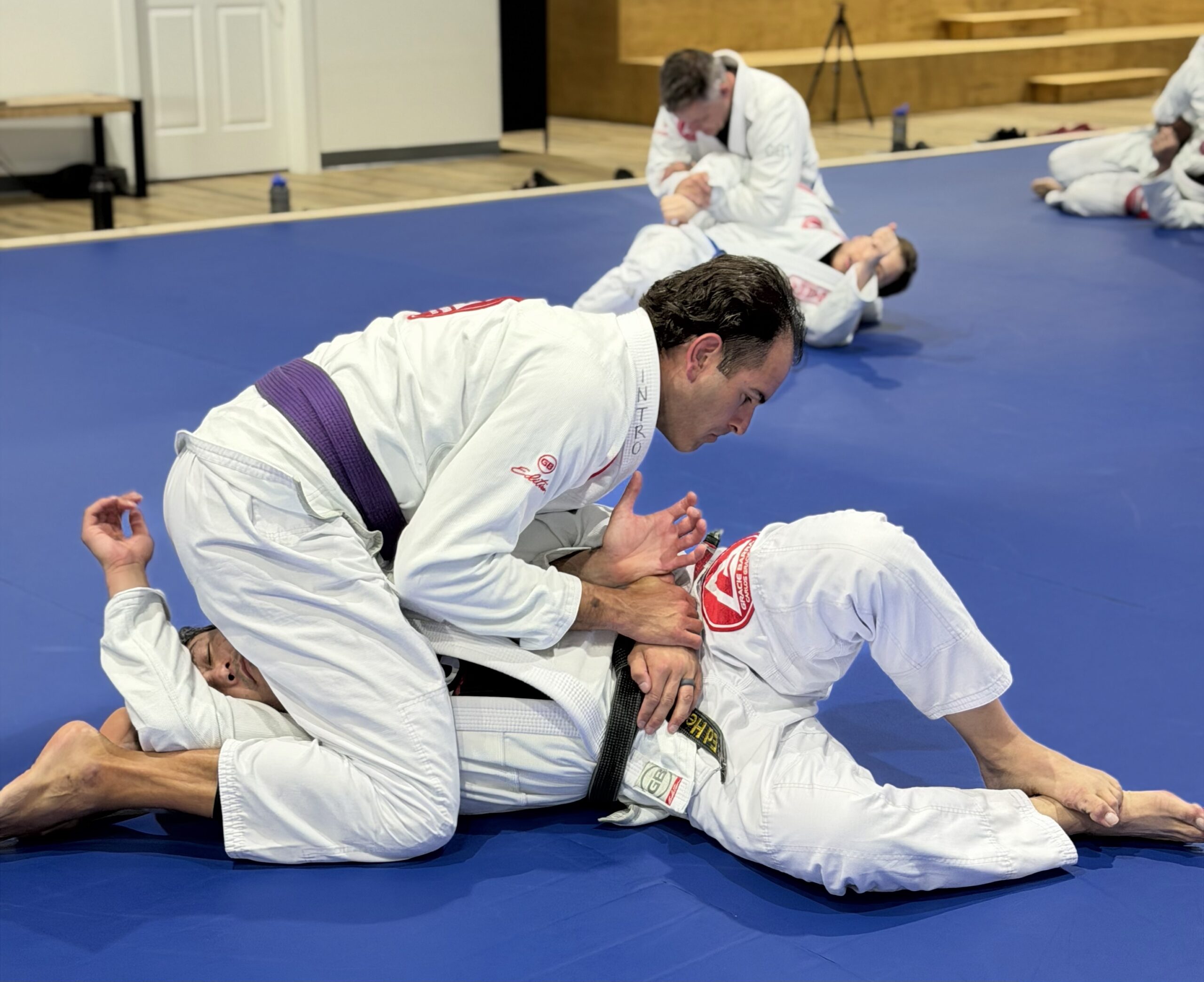
Many practitioners describe the purple belt as the creative phase of Jiu-Jitsu. By this point, you possess a solid grasp of fundamental and intermediate techniques.
Consequently, your focus shifts toward developing a distinct, personalized game plan. You connect individual techniques into seamless, fluid combinations. Moreover, purple belts often begin mentoring newer students, deepening their own comprehension through teaching.
Brown Belt: Polishing Details and Sharpening Attacks
Brown belt represents the transition phase toward true mastery. Practitioners at this level execute techniques with surgical precision and exceptional timing.
Instead of learning completely new moves, brown belts focus on micro-adjustments and efficient weight distribution. Furthermore, they anticipate an opponent’s reactions several steps ahead. This high level of tactical awareness sets the stage for the final promotion.
Black Belt: A New Beginning of Mastery
Achieving a Brazilian Jiu-Jitsu black belt takes an average of ten years of disciplined training. While society views the black belt as an ultimate finish line, practitioners recognize it as a brand new start.
A black belt demonstrates technical excellence, deep humility, and exemplary leadership on the mats. Most importantly, black belts embody the values of martial arts both inside and outside the academy.
How the Gracie Barra Stripe System Works
Belts alone do not tell the whole story of continuous student advancement. Gracie Barra utilizes a standardized stripe system to recognize incremental milestones along the way.
Each belt rank up to brown belt features four distinct stripes on the black sleeve bar. These stripes represent tangible progress markers between major promotions:
Mat Time and Attendance: Regular attendance builds muscle memory and sharpens your instincts. We track completed classes systematically through our official curriculum structure.
Technical Proficiency: Instructors continuously observe your ability to execute techniques correctly during drilling sessions.
Live Sparring Performance: Applying concepts cleanly against resisting training partners demonstrates true functional capability.
Character and Etiquette: Respecting training partners, embracing humility, and keeping the mats safe matter just as much as physical skill.
Consequently, receiving a stripe confirms that your hard work translates directly into measurable growth.
Embracing the Journey Over the Destination
Obsessing over the color of your belt can create unnecessary frustration during plateau phases. Progress in martial arts rarely follows a completely straight line. Some days you execute every technique flawlessly, while other sessions feel challenging and exhausting.
Fortunately, training at Gracie Barra Kenwood places the emphasis on continuous self-improvement rather than rapid status. When you focus on enjoying the daily process, promotions arrive naturally as a byproduct of your dedication. Every hour spent on our mats builds lasting discipline and physical capability that extends far beyond the gym doors.
Start Your Jiu-Jitsu Journey at Gracie Barra Kenwood
Whether your child needs a boost in confidence or you want to pursue your own black belt, the journey begins with showing up. Our world-class instructors provide a clean, safe, and structured environment for practitioners of all ages and fitness levels.
Discover Gracie Barra Kenwood
Visit our official academy website to book your free introductory class today. Step onto the mats at Gracie Barra Kenwood, meet our welcoming team, and begin your exciting path toward martial arts excellence!