Why Side Control Feels So Hard for New Students
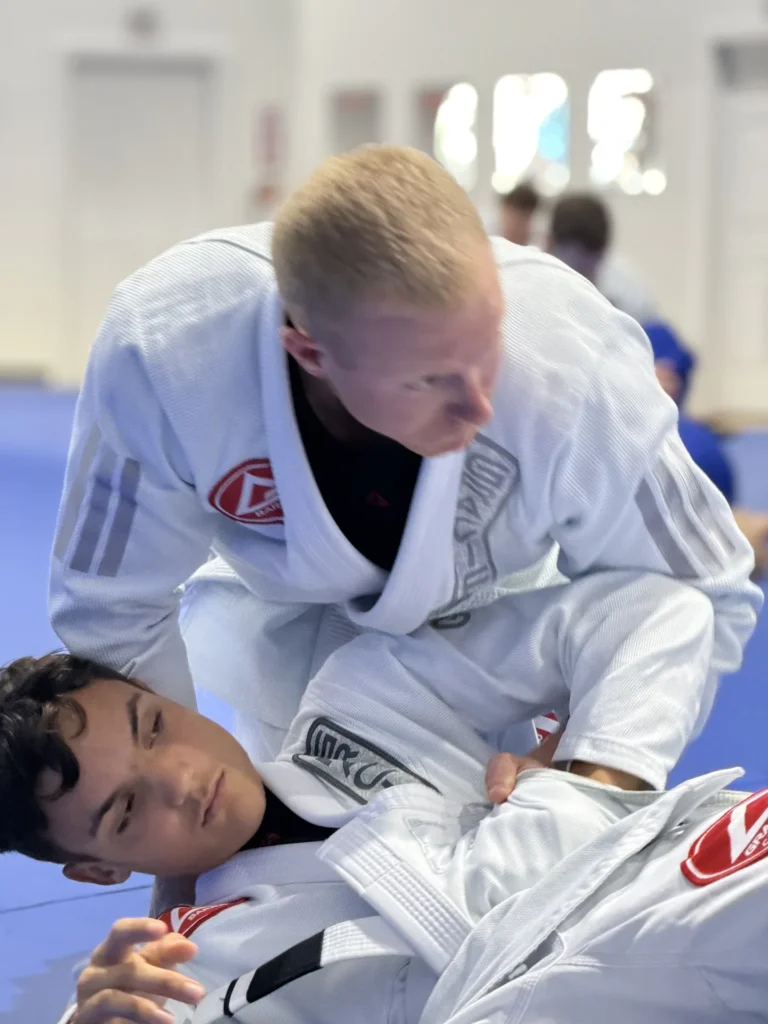
Sooner or later, every new student ends up flat on their back with a partner pinned across their chest. Learning how to escape side control in BJJ is one of the first real puzzles beginners in Kenwood, Ohio work through, and the lessons carry into every other position.
At Gracie Barra Kenwood, adults start in our GB1 Fundamentals program, which builds from first-day basics toward more advanced work. This guide explains the simple ideas behind a good escape, so your first training rounds feel less confusing and more productive.
DISCOVER Gracie Barra Kenwood
CLICK HEREHow to Escape Side Control in BJJ: The Core Principles
Side control is a pin where your partner lies across your chest from the side. Escaping it is less about strength and more about order. Do the right things in the right sequence, and space starts to open up.
Protect Your Neck and Your Breathing First
Before you think about escaping, make sure you are safe. Keep your chin tucked and your elbows close to your body. This stops your partner from easily reaching your neck or pulling your arms away.
Once you feel protected, slow your breathing down. Short, panicked breaths drain your energy quickly. Calm breathing gives you the patience to wait for the right moment instead of forcing a move that will not work.
Build Frames With Your Forearms
A frame is a solid shape you make with your arms to hold your partner’s weight away from you. Think of it as a brace, not a push. Your bones carry the load so your muscles do not tire out.
A common setup places one forearm against your partner’s neck or collarbone and the other hand on their hip. These frames will not move them far, but they keep them from settling in and give you room to work.
Use the Shrimp to Create Space
The shrimp is a hip movement where you push off one foot and slide your hips away from your partner. It looks simple, yet it is one of the most important movements beginners learn in jiu-jitsu.
Your frames hold your partner in place while your hips move away. That small gap is your opening. A good escape often comes from several small shrimps in a row rather than one big, exhausting effort.
Recover Guard Instead of Rushing to Stand
Once you have space, the goal is usually to bring a knee back in between you and your partner. Getting your legs back in front of you puts you in a much safer and stronger spot.
From there, you can rebuild your guard and start working your own offense. To see why the bottom position can be so effective, our guide on closed guard fundamentals explains how smart leverage helps you handle top pressure.
Common Mistakes When You Are Pinned
Most beginners make the same few mistakes when they first get stuck underneath. Knowing what they are helps you spot them in your own training and fix them sooner.
Pushing With Straight Arms
It feels natural to push someone off with fully straight arms. Unfortunately, this tires you out fast and leaves your arms easy to grab. Straight arms are a common way beginners get caught in arm locks.
Instead, keep your elbows bent and your frames close to your body. When your partner leans into you, let your structure hold the weight. Then use your hips, not your arms, to create the real movement.
Lying Flat on Your Back
When you stay flat, your partner can spread their weight across your whole chest. This makes the pressure feel heavier and leaves your hips stuck to the mat with nowhere to go.
Try to turn slightly onto your side, facing your partner. This small change frees your hips to move and makes your frames stronger. It is one of the quickest fixes a new student can make.
Panicking and Burning Energy
Being pinned can feel uncomfortable, especially in your first few weeks. Many beginners respond by twisting and bucking with everything they have. That burst rarely works and leaves them exhausted a minute later.
Staying calm under pressure is a skill you build over time. Many adults find that this calm follows them off the mats, which is one reason people train to manage daily workplace stress.
Simple Drills That Make Escapes Feel Natural
Understanding how to escape side control in BJJ is only the first step. To use it in live training, the movements need to become automatic. These simple drills help build that habit.
Solo Shrimping Practice
You can practice shrimping alone, either during warm-ups or at home on a soft surface. Move across the room by pushing off your foot and sliding your hips back, one side and then the other.
Focus on smooth, controlled movement instead of speed. Over time your body learns the motion so well that you do it without thinking when someone pins you during a training round.
Positional Rounds From the Bottom
Positional training means starting a short round in one specific position. One partner begins on top in side control, and the other works to escape. Then you reset and switch roles.
This focused practice gives you many repetitions in a short time. It is also a common part of structured competition training, where athletes repeat key situations until their reactions become sharp and reliable.
Tracking Small Wins Over Time
Progress with escapes is often slow and hard to notice. One week you survive longer. Another week you recover guard once. These small wins add up, even when they do not feel dramatic.
Keeping a short training journal can help you see how far you have come. Each improvement becomes part of your larger belt progression journey, where steady effort matters more than quick results.
What Good Escape Habits Look Like
When people ask how to escape side control in BJJ, the answer usually follows the same order: protect, frame, move your hips, and recover guard. Skipping steps is where most problems begin. Patience and good structure beat strength or speed.
At Gracie Barra Kenwood, our experienced instructors guide students through each detail in class. Asking questions and getting feedback from a coach helps you correct small errors before they turn into habits.
Putting It All Together on the Mats
Escaping side control comes down to calm, smart steps. Keep your neck safe, build strong frames, move your hips, and bring your knees back in. With regular practice, a position that once felt scary becomes manageable.
Jiu-jitsu is also something you can share with the people closest to you. If someone at home is curious about training, jiu-jitsu for the whole family can turn practice into time spent together.
DISCOVER Gracie Barra Kenwood
CLICK HEREKeep Showing Up and the Escapes Will Come
Learning how to escape side control in BJJ takes time, and every student struggles with it at first. The good news is that each round on the bottom teaches you something useful for the next one.
If you live in Kenwood or nearby Cincinnati and want to learn these skills in a supportive setting, we would be glad to see you on the mats. Stop by, meet the team, and take your first step.